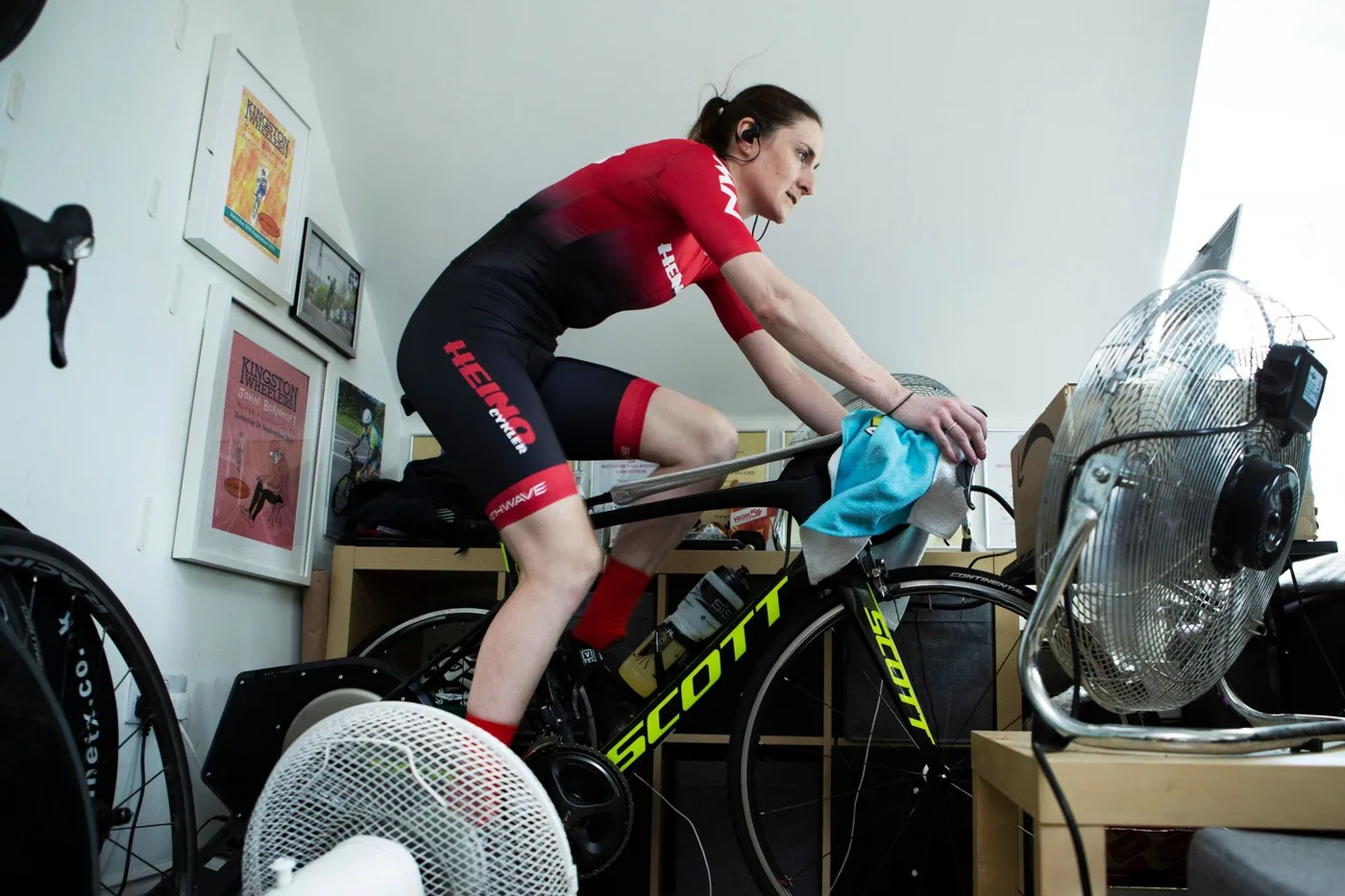
LONDON — Former 100-mile and 12-hour British time trial record holder Alice Lethbridge rode outdoors only a handful of times in 18 months after developing thoracic outlet syndrome. The 41-year-old biology teacher first showed symptoms at the East Cleveland Classic in spring 2024, a condition that compresses the arteries between her ribs and collarbone and left her with numb hands and nausea.
“I just couldn’t be in the bunch,” Lethbridge tells Cycling Weekly. “It was making me feel very dizzy turning my head outside... I started to feel like maybe I was going to vomit.” Later that summer her hands became worryingly cold and she saw a doctor. Diagnosis took almost a year, but the decision to stop riding outdoors was immediate. “I could ride on a trainer because you don’t have to turn your head to look over your shoulder,” she explains.
Lethbridge joined Zwift in the lockdown of 2020 and within two years made her debut for Great Britain at the UCI Cycling Esports World Championships. Dogged by symptoms, she trained up to 20 hours a week in school holidays and 10-12 hours in term time, often rising at 5am for a turbo session before work. “Last summer, I would say, I was at my fittest ever, which was incredibly frustrating to be stuck indoors and not be able to race outdoors with it,” she says. She switched to higher-intensity intervals and group rides on Zwift and MyWhoosh with the FemmeCycle Collab community she helped expand.
Consistency brought prize money on MyWhoosh, which she put towards physio treatment, a development she called a massively welcome bonus. She returned to outdoor riding this summer after botox injections paralysed the affected muscles. “Unfortunately it’s worn off now, so I’m back indoors,” she says. Doctors have suggested a second round of injections, a course they have never prescribed before, and she hopes it will allow a longer return to the roads.
Her advice for finding motivation indoors is simple: join a team. “Not being around club mates regularly or racing team-mates is the biggest challenge for me,” she says. “If you’ve signed up and said, ‘Yeah I’m going to race with the team in this event,’ it’s the same as telling your friends, ‘I’m going to turn up for the ride outside’. It’s even easier than racing outdoors – you just click a link and you’re in.”