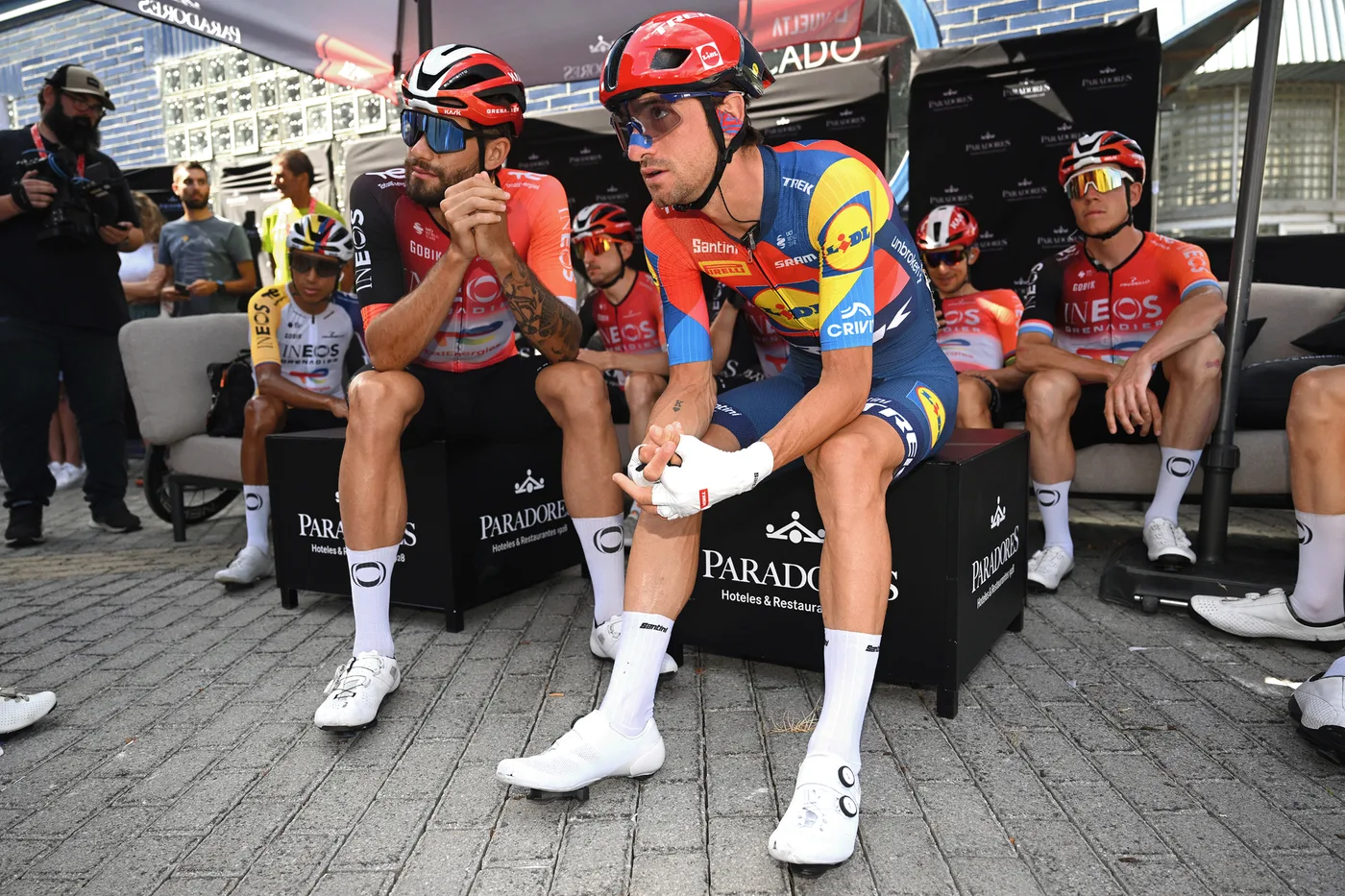
LONDON — The early departures of Richard Carapaz, Filippo Ganna and Giulio Ciccone to new teams before their contracts expired have highlighted a transformation of cycling's transfer market, with agent Alex Carera saying almost any rider is now available in theory. Carera, whose agency A&J All Sports also represents Paula Blasi — who has made a similar early move — and Tadej Pogačar, told La Gazzetta dello Sport that the practice is becoming increasingly common across the men's and women's peloton.
"First of all, the average length of contracts has increased - by a lot. Therefore, the likelihood of arguments over a long contract, and even termination, increases," said Carera. "In essence, if the contract is only two years long and problems arise, you shouldn't wait that long for it to expire, and it's not even worth arguing about. You might sulk for a year, and then you move on. But if, for example, the contract is five years long, it's easy to see that things are very different."
"The second reason is even more crucial, considering that if you want to break an existing contract, you don't just have to negotiate with one team, but also have another team ready to sign you," Carera added. He said that until five or six years ago most team owners were team managers, often former cyclists, who lacked long-term vision and would not risk penalties for signing riders from other teams. Now, he said, "[Some of the] team owners are... the sponsors themselves. UAE, Decathlon, Lidl, Red Bull, to name a few. They have a more managerial, long-term vision. The cycling team is a key asset for the company, or the fund, unlike before, where there was often no entrepreneurial vision. And there's a greater tendency to be more 'aggressive' on the market, because they have to value the annual investment in cycling. Not to mention the fact that the capital invested is much greater. A momentous change."
Carera pointed to recent high-profile early moves including Remco Evenepoel and Primož Roglič both to Red Bull-Bora-Hansgrohe and Juan Ayuso to Lidl-Trek as examples of that aggression. The UCI overhauled its rules to require a three-party agreement between the rider, their current team and the new team to enact a move, introduced to prevent controversial poaching after the polemic around the early departure of Cian Uijtdebroeks — another of Carera's riders — from Visma to Red Bull. Carera identified Uijtdebroeks' departure from Bora to join Visma in December 2023 as the turning point, saying: "Until then, early contract terminations occurred once every three years; now, they're about 10 a year. And then, capital has increased enormously: in 2020, if a team had a budget of €25 million, it could be considered wealthy. Now, it would be in the bottom five."
"Is Tadej Pogacar the exception?" asked La Gazzetta's Ciro Scognamiglio. "Yes, because it has too high a value, the clause is almost symbolic: Tadej has gone beyond the boundaries of cycling," Carera replied. Pogačar remains tied to his deal until 2032, making him one of the most tied-down riders in the sport alongside those on lifetime contracts until retirement: Wout van Aert, Marianne Vos and Mads Pedersen.