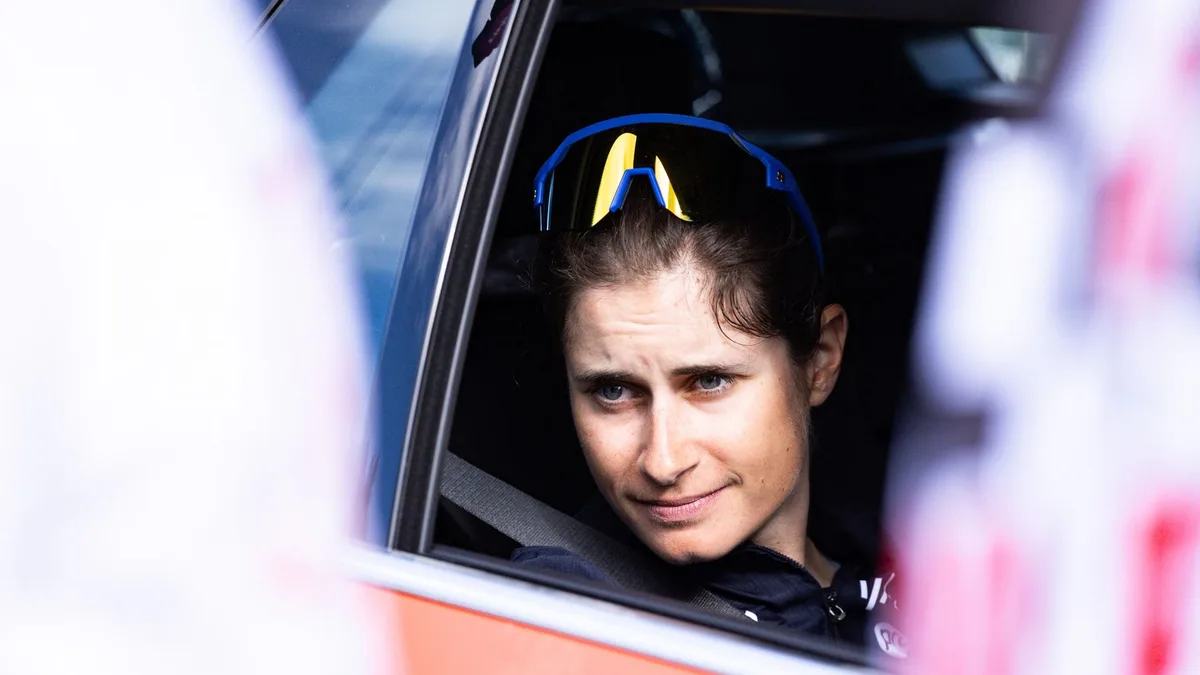
LONDON — The International Testing Agency has apologised to Valentina Cavallar after conducting a doping control at an "extraordinarily painful" time, visiting the Austrian rider on the day her mother died in September and testing her in a room next to where her mother's body lay.
The 25-year-old SD Worx-Protime rider said yesterday on social media that she had been subjected to testing immediately after her mother's death last month, decrying the lack of discretion shown by authorities. Cavallar, who stepped back from racing for "personal and family reasons" after withdrawing from the Tour de France Femmes and subsequently suffering the loss of her mother, implied the trauma of the incident had played a part in her decision to take time away from racing.
"Riders, especially at international level, are subject to testing regardless of their participation in races in order to ensure a comprehensive and sustainable anti-doping programme," said Marta Nawrocka, Head of Communication at the ITA. "This includes both in- and out-of-competition testing." Nawrocka added: "In this particular case, the doping control officer was not aware of the athlete's personal circumstances upon arrival. Once these became apparent, the officer sought to handle the situation with sensitivity and respect, completing the procedure as promptly as possible and in accordance with the applicable anti-doping regulations."
"We fully recognise that this was an exceptionally distressing situation for the athlete and that regulatory compliance alone does not address the human dimension of such circumstances," Nawrocka continued. "According to the information gathered by the ITA since the rider's Instagram post of yesterday, Ms Cavallar and her family cooperated fully with the procedure, and no concerns or requests to postpone or discontinue the control were raised at the time or afterwards." She added: "Faced with an exceptionally sensitive situation, the DCO, with the rider and her family's support, endeavoured to pursue the procedure as discreetly, respectfully and swiftly as possible. We fully recognise that undergoing a doping control in these circumstances has added to her distress experienced at an extraordinarily painful time. We have been in touch with the rider directly and apologised."
The UCI requires professional riders to supply details of their movements and locations between 6am and 11pm, whether they are competing or not, with the ITA able to test them at any time. Out-of-competition testing, introduced in 2004 and mandated for all Olympic sports under the World Anti-Doping Agency code, allows testers to take blood and/or urine samples, with refusal carrying the same penalty as a positive test. In exceptional circumstances with WADA permission, the ITA can also test outside those hours, as happened during this year's Tour de France when multiple riders including eventual winner Tadej Pogacar and two-time champion Jonas Vingegaard were tested in the middle of the night.