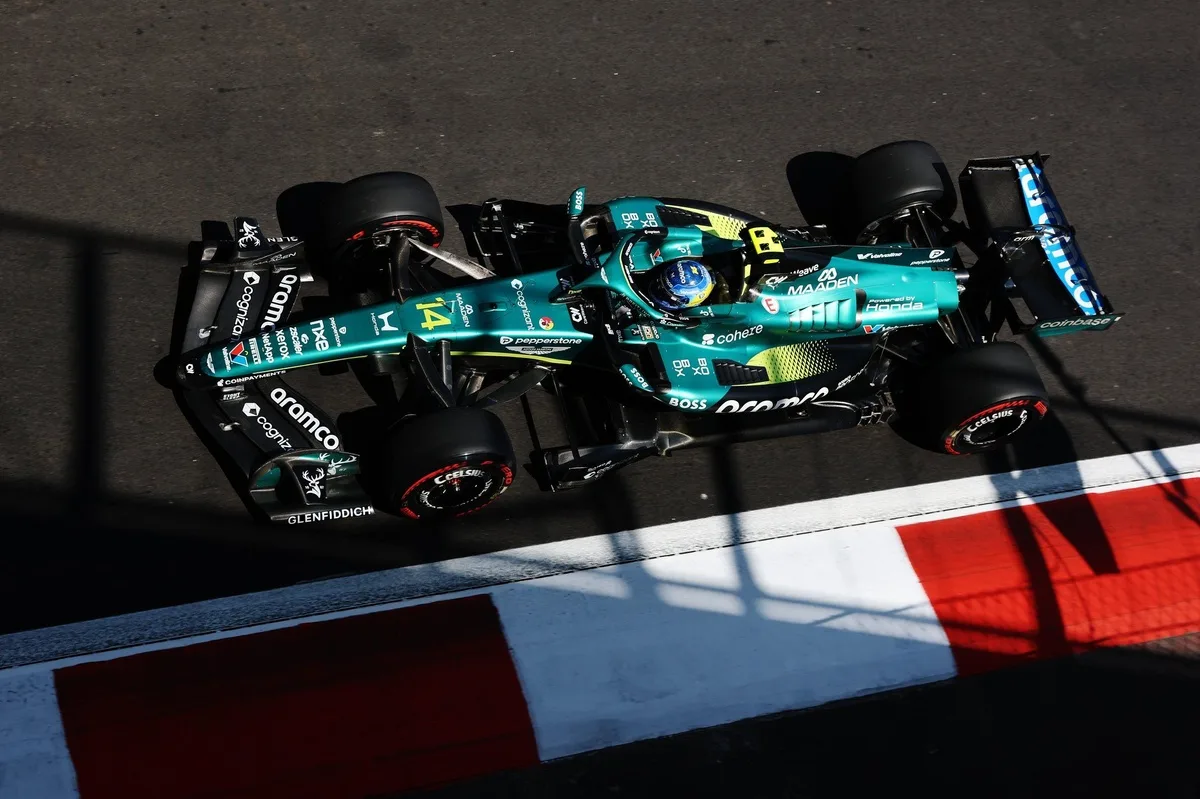
LAS VEGAS — Honda have confirmed they will update the internal structure of their energy store for the 2027 Formula 1 season after a battery failure forced Lance Stroll to retire from the Sao Paulo Grand Prix, his 14th retirement of the campaign to equal the all-time record for most retirements in a single season.
Ahead of the Las Vegas weekend, Honda have gathered more information on the failure, with chief engineer Shintaro Orihara telling Motorsport.com: "After Brazil, we have done some inspection on the battery and we found, as expected, what happened." He added: "It's a kind of expected issue. We thought we applied a countermeasure for Brazil, but that was not enough to prevent a battery issue from happening."
"Then for this event, we brought another countermeasure to get better reliability," Orihara said. "The countermeasure we brought to this event will probably, how to say, not fully prevent it. We still need to get a complete picture and understanding." For 2027, Honda will move beyond countermeasures, with work ongoing in Sakura. "But for 2027, we will update the structure inside the battery to have better reliability," he said.
Honda confirmed the change concerns "the internal structure of the energy store to increase robustness and overall reliability". Orihara explained the need had become apparent before Brazil, but lessons from the latest failure can still improve the 2027 power unit. While reliability is the aim for the battery, outright performance work remains focussed on the internal combustion engine.
"Under the previous regulations, we found what we call rapid combustion. That gave us a lot of performance under those regulations," Orihara admitted. He said Honda started development for the current rules with rapid combustion before realising further improvement was needed, complicated by the loss of the cylinder pressure sensor. "If we have good control, we can keep that peak power in a wider range," he said, adding the team must improve combustion control and performance.