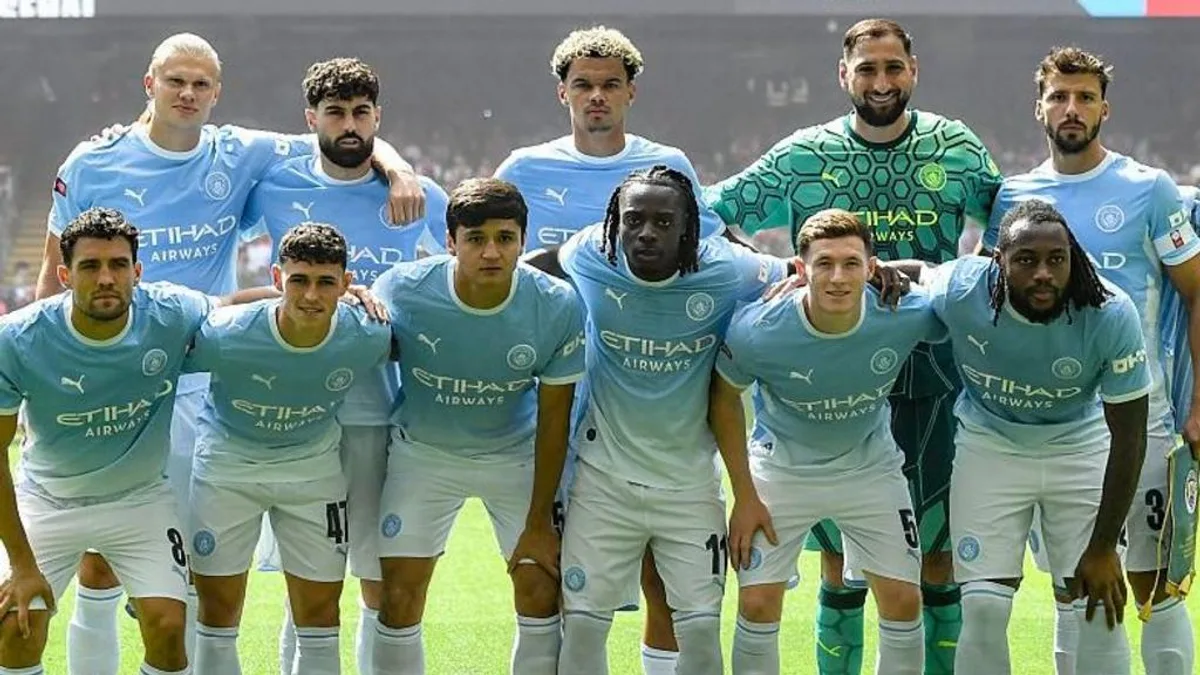
MANCHESTER — Manchester City have overhauled their Treble-winning squad using a sophisticated data operation built around a 650,000-player database and the guiding question: "What does it take to win?" Since winning the Treble in 2023, only four players from that historic campaign remain after a vast three-year revamp, with the club's devotion to data at the heart of efforts to close the gap on Arsenal after five wins from five Premier League games to start the season.
Last season City's data department projected they would be there or thereabouts in the title race, but their metrics indicated Arsenal were favourites to be champions. They were accurate. This time City prefer to keep projections under wraps. "Data plays a role in our decision-making, but it is just one part of the overall picture," City sporting director Hugo Viana told BBC Sport. "We know data cannot tell us everything about a player. It cannot fully show a person's character, mentality or behaviour. That is why we study data insights but focus on the expertise of our scouts and other specialists."
The starting point for any signing is the 650,000-strong worldwide database. The brief typically starts with a position, though City categorise roles in detail — full-backs, for example, into three types: defensive, those who come inside, and those who play high and wide. Filters grading overall ability whittle the database to 20-50 names, a list cross-referenced with the scouting longlist where there is generally significant overlap. Further refined metrics then rank the longlist before scouts reduce it to a maximum of about six players for deeper dives into injury record, athletic performance and behavioural habits. Juventus full-back Andrea Cambiaso was highlighted by data for his ability to come inside to build play in midfield and comfort with both feet, but in accordance with data and scouting reports City decided not to proceed in the previous window, though he will continue to be monitored. The process also underpinned the £116m signing of Elliot Anderson.
Information is collated into individual acquisition packs. Each contains a radar chart rating specific on-field metrics, a utilisation chart recording how often the player has been used over a three-year period, and a scouting grade. When Jeremy Doku was signed in 2023, then manager Pep Guardiola wanted a direct winger akin to Leroy Sane to complement Jack Grealish and Riyad Mahrez, who preferred to keep the ball and cut inside. Criteria included making (running into) the box, pressure regains, take-on percentage and opposition-half pressure. Doku ticked the boxes, although his 'making the box' score was among his lowest readings, a rating City say he has since improved. Each player also receives a "current impact score" predicting immediate impression and a "potential impact score" projecting future contribution, plus an "action value score" that positions him in a league table alongside City players and rivals in a similar role.
At City, one fundamental aim is to reduce risk of any market transaction, be it purchase or sale, by assessing the system a player operates in at his current club and how his manager asks him and the team to play. Once those aspects are observed, the goal is to understand not just how good the player is but how good he could become at the Etihad. While data's prominence has grown significantly behind the scenes, traditional scouting remains the primary gauge on whether to move for a player.