LONDON — English football's finances are "dangerously exposed, with the majority of clubs living on the edge of financial disaster", according to a landmark State of the Game report by the independent football regulator. Research by the watchdog found 94% of clubs are loss-making, with more than 60% of EFL and National League clubs technically insolvent, while the financial cliff-edges between and within leagues have grown significantly despite the Premier League's economic success.
The report found 94% of clubs in the top five English leagues made losses in 2025-26, with 17 clubs across the EFL and National League loss-making even if their players played for free. It warns 66% of clubs could not survive for more than 90 days without new owner funding, 29% could not survive more than 30 days, and 60% have no kind of business plan at all. "Seventeen clubs are now trading in such a way that if their players played for free, their non-playing costs would mean they would go bust," IFR chair David Kogan told BBC Sport. "Thirty-two clubs are operating on only 30 days' cash. If the owner chooses not to pay cash at the end of the month, those clubs go bust."
The IFR warns of "a dangerous cocktail of rising debt and an over-reliance on owner funding, leaving clubs and their fans at risk" and says "the underlying foundations of the pyramid are under intense strain and require urgent reform". The average Premier League club now earns more than eight times the average Championship side, while the existing system of parachute payments "contributes to the incentives for Championship clubs to overspend which drives up player wage inflation". Net transfer debt is rising sharply, with deferred payments and transfer financing increasing "the potential for financial stress to spread across the game".
Transfer financing — mortgaging future instalments due from transfers for immediate cash — has become "an increasingly important source of liquidity", rising from £55m in 2020-21 to £779m by 2024-25, a more than 14-fold increase. About £1.2bn of future transfer income has now been monetised, an almost 22-fold rise, while in 2025-26 English clubs reported approximately £4.8bn in transfer payables against only £1.5bn in receivables — a net transfer debt of about £3.3bn, with outgoings about 3.3 times incomings. Twenty clubs, primarily in the Championship, League One and National League, spent more than 80% of revenue on player wages, with the majority of League One clubs spending more than 40% including two spending more than 100%. Seventeen of 18 EFL owners surveyed (94%) favoured more robust cost controls, with one investor telling the report: "the single biggest issue is player wages".
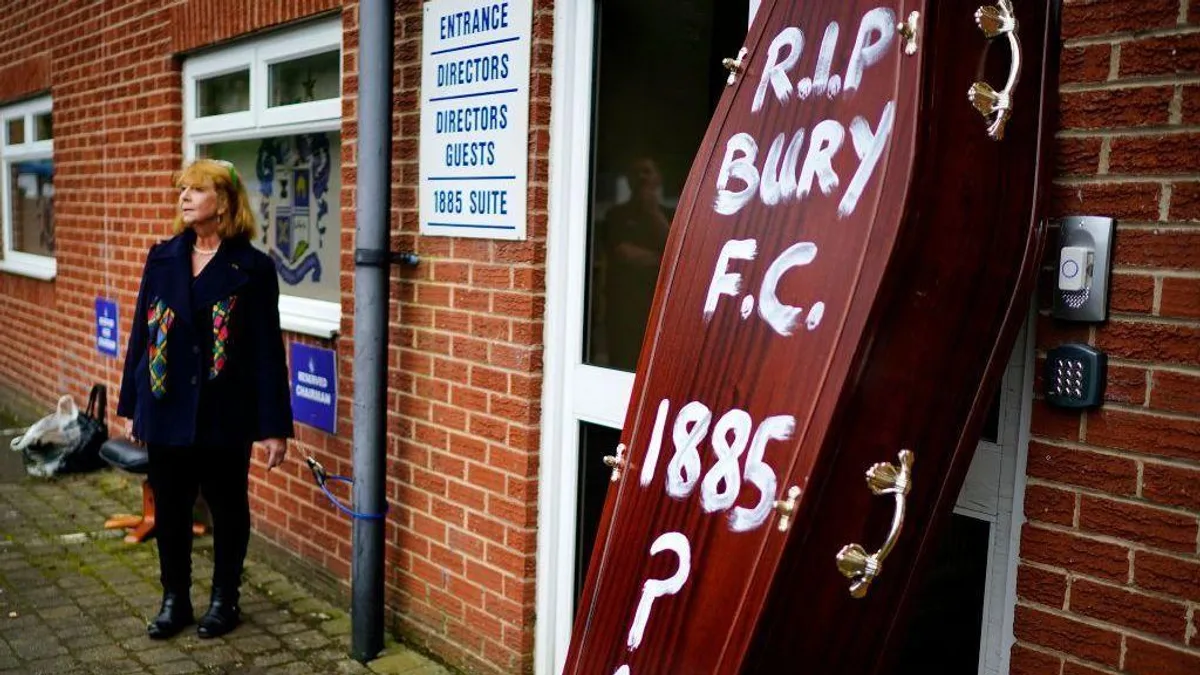
"Nobody in football for 100 years has believed that football was trading in a solvent and effective state," Kogan said. "But I think now where there's so much more money involved, the extremes get more extreme." The IFR, tasked with improving financial sustainability, has outlined six areas of concern and urged clubs to put robust contingency plans in place, warning "if football can't find a solution we will consider our next steps and will not hesitate to use all the powers at our disposal to bring about lasting change" as the Premier League and EFL remain without a new funding settlement. The Premier League, the EFL, the Football Association and the Football Supporters' Association have all welcomed the findings, which recall Bury's expulsion from the EFL in 2019 — the first such case since Maidstone's liquidation in 1992. The warning follows IFR chief Kogan's vow to resign over Man City interference should the regulator's independence be compromised.