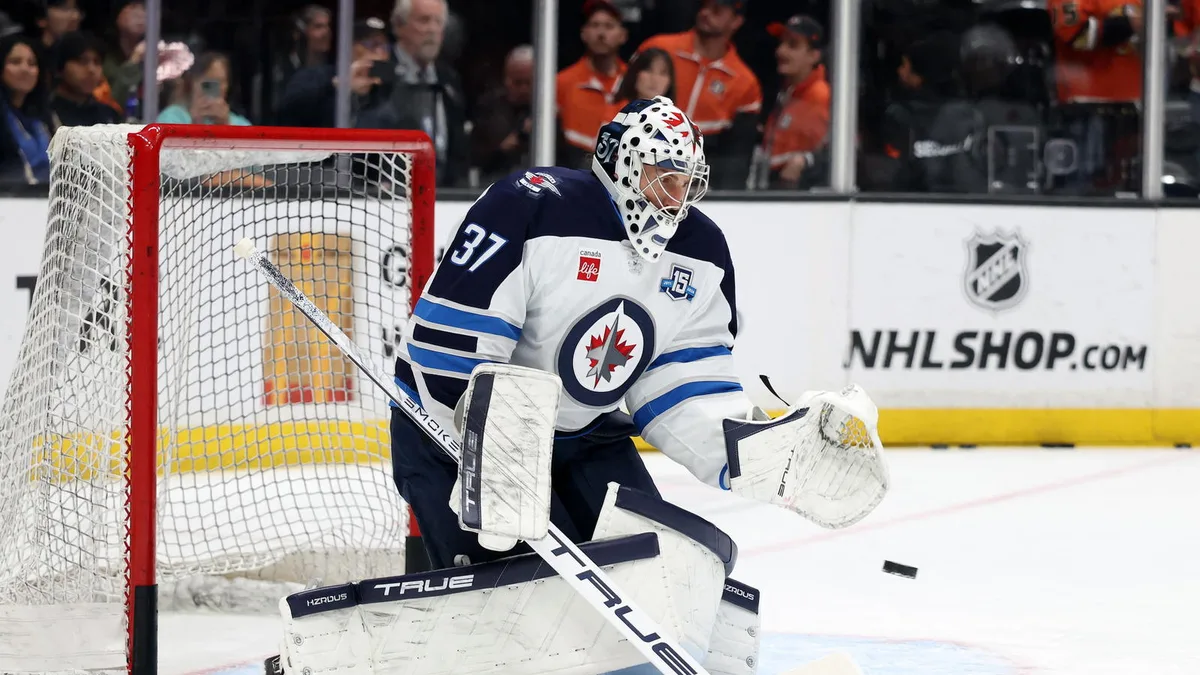
WINNIPEG — As the NHL season moves past its second week, there has been no significant movement on two prominent trade-demand standoffs involving Detroit Red Wings star centre Dylan Larkin and Winnipeg Jets superstar goaltender Connor Hellebuyck. Larkin, the former captain and Michigan native who asked out of Motown, has continued to report, while Hellebuyck has refused to appear at training camp and has been suspended indefinitely by the Jets.
The age of NHL player empowerment may be upon us, but Red Wings interim general manager Shawn Horcoff and Jets general manager Kevin Cheveldayoff are pushing back. While Hellebuyck and Larkin are within their rights to try and control their destiny as players, spouses and fathers, the clubs are equally within their rights to do what they feel is best for the organisation. Players can attempt to alter their trade value by withholding services, but if the team decide they are not being adequately compensated, they are in no way forced to sign off on a deal.
Winnipeg are a team built to win now, so Cheveldayoff is not interested in draft picks and prospects as the core assets of any Hellebuyck trade. Detroit will be looking for a high-end group of players who can help the Red Wings win sooner rather than later. Salary cap space has further complicated matters, with interested teams either lacking the space to be cap-compliant, lacking the trade capital to satisfy the Jets, or both. In some cases a deal would require a veteran goaltender to be sent back to Winnipeg, which could be a deal-killer from the Jets' perspective.
Larkin's situation is different in that he did report to training camp and has played games, but his trade request has not been rescinded and there is no indication he has changed his mind about leaving Detroit. While Horcoff may not necessarily need players who can contribute right now in a potential return, he still needs to be able to defend any Larkin trade not only for the moment but for the long term, and is naturally erring on the side of caution rather than simply trading Larkin to a team of his preference to keep the player and his agent happy.
In the end, Cheveldayoff and Horcoff are beholden to two groups: team ownership and the fans. While maintaining good relationships with players is also important, it falls below being able to look ownership and supporters in the eye and say without reservation they have done what was best for the team. It is a system both sides have collectively bargained — players can complain, just as general managers can complain about the proliferation of no-trade and no-move clauses — and that means these standoffs are going to continue.