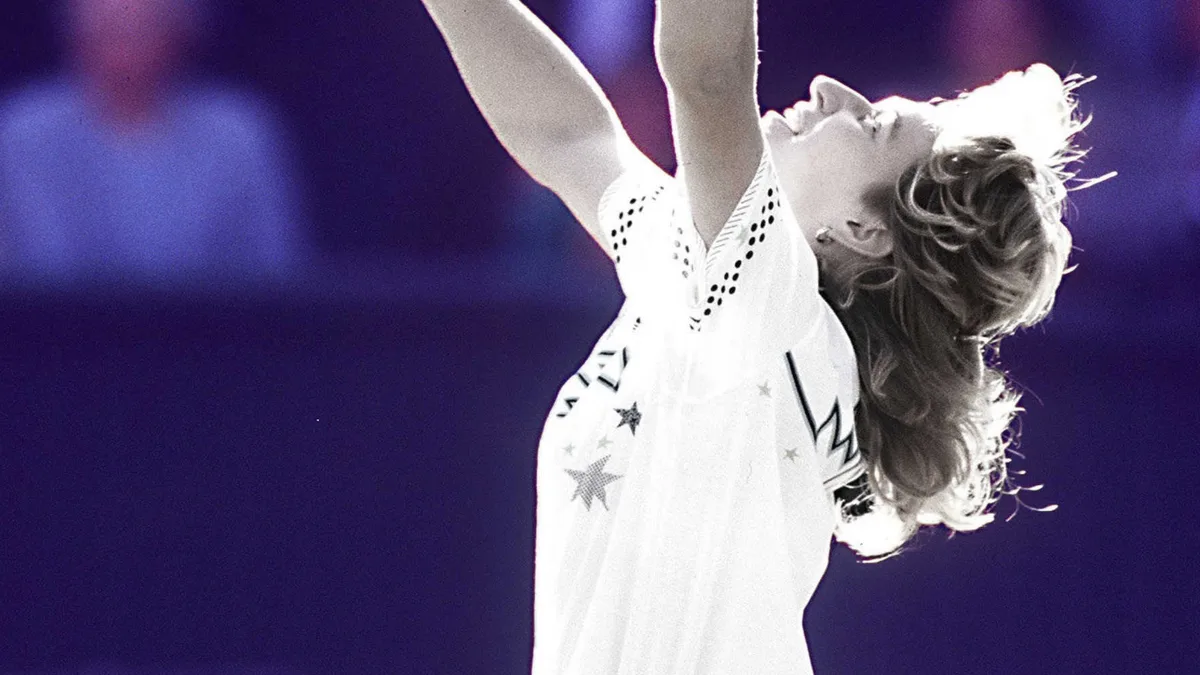
SEOUL — On September 29, 1988, Steffi Graf took the penultimate step toward the only Golden Slam in tennis history, routing eighth-seeded Zina Garrison 6-2, 6-0 in the Olympic semi-final at the Seoul Olympic Park Tennis Center to reach the gold-medal match against Gabriela Sabatini. The victory came just 18 days after Graf completed the calendar-year Grand Slam at the US Open, where she beat Sabatini 6-3, 3-6, 6-1, and left her one win from an unprecedented sweep of the four majors and Olympic gold.
Graf, the undisputed world No. 1, admitted to fatigue after her triumph at Flushing Meadows only 10 days before the start of the tournament in Seoul, but advanced without major trouble. She beat Leila Meskhi 7-5, 6-1 in the first round, routed Catherine Suire 6-3, 6-0 in the second, and outlasted Larisa Savchenko of the Soviet Union 6-2, 4-6, 6-3 in the quarter-finals. Against Garrison, who had not dropped a set in her first three matches in Seoul and had just reached the US Open semi-finals after beating Martina Navratilova for the first time in 22 attempts, Graf played her best match of the tournament, blasting winners with her trademark forehand to improve to 3-1 in their head-to-head. “I wouldn’t give Steffi the gold medal right away though she’s playing great,” Garrison said, according to The New York Times. “You never know. She did play so well, though. Everything zipped past me.” Graf said, “I am excited, because I played great tennis. I am very pleased, especially after the last couple of days when I did not play that well.”

The semi-final capped a dominant 1988 season that had already rewritten the record books. Graf started the year by winning the Australian Open against Chris Evert 6-1, 7-6, then punished Natasha Zvereva 6-0, 6-0 in the Roland-Garros final, the shortest major final in history. At Wimbledon she beat six-time defending champion Martina Navratilova 5-7, 6-2, 6-1, before beating Sabatini in New York to become the first player to win the calendar-year Grand Slam since 1970. She had taken the WTA No. 1 ranking from Navratilova on August 17, 1987, after a breakthrough 1987 season in which she won Roland-Garros over Navratilova and finished runner-up at Wimbledon and the US Open.
The Seoul Games marked tennis’s return to the Olympics after an absence since 1924, following the International Olympic Committee’s decision on May 11, 1987, to include the sport. By admitting all players, the IOC officially acknowledged the end of amateurism. Garrison, born in 1963 in Houston, Texas, and developed in John Wilkerson’s public parks program as the first Black player to be No. 1 in Texas, had won her first of six titles in Zurich in 1984 over Claudia Kohde-Kilsch 6-1, 0-6, 6-2 and reached the Wimbledon semi-finals in 1985, losing to Navratilova 6-4, 7-6, before her run in New York where she lost to Sabatini 6-4, 7-5.
Graf would complete the Golden Slam the next day, defeating Sabatini 6-3, 6-3 in the final, the first and only Golden Grand Slam to date. She held the No. 1 ranking until Monica Seles supplanted her in 1991, then returned to the top after Seles’s stabbing in 1993 and remained there until 1997, setting a record of 377 weeks at No. 1. By winning the 1995 US Open she became the only woman to win each of the four Grand Slam titles at least four times before retiring in 1999 after claiming her last major title.